
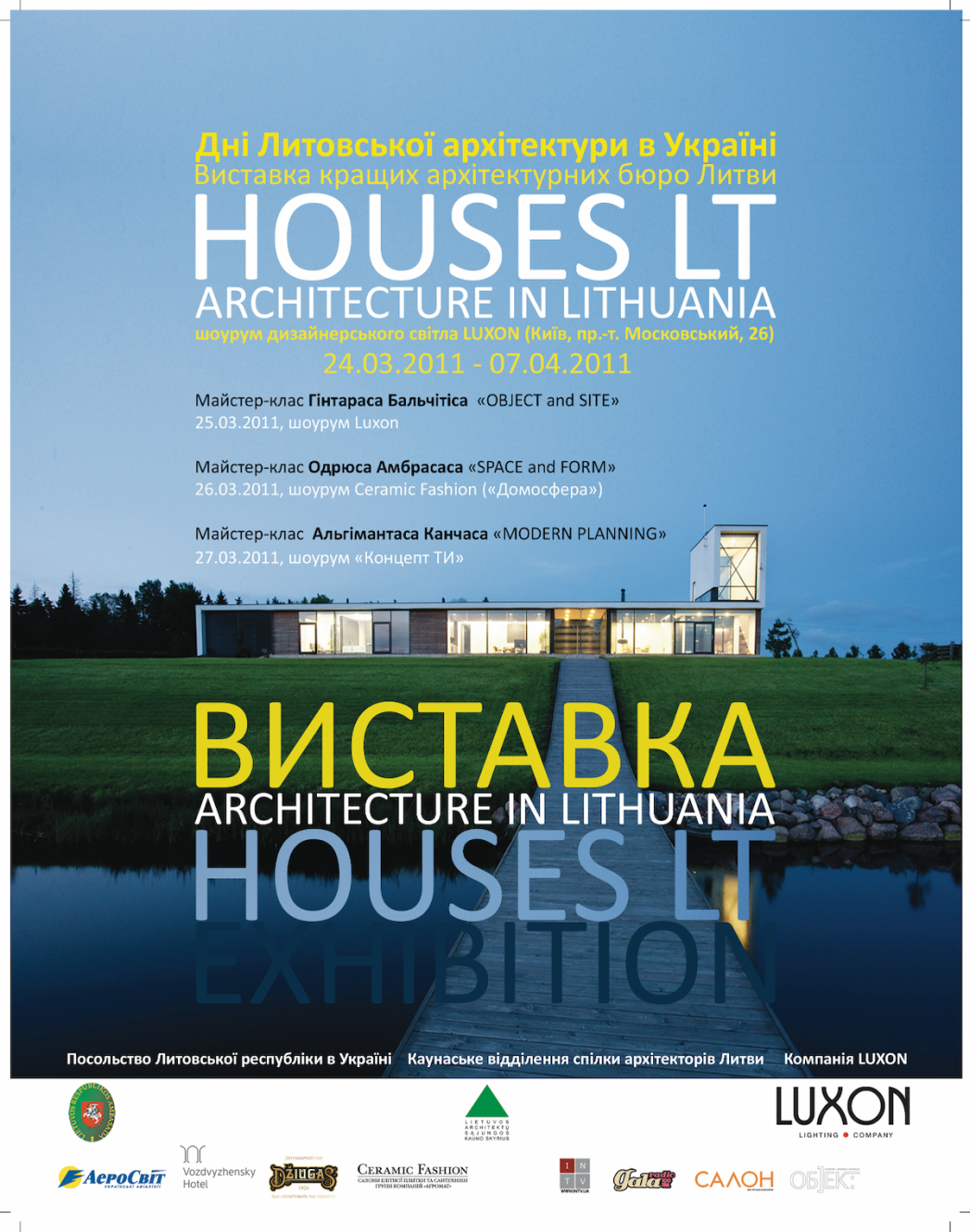
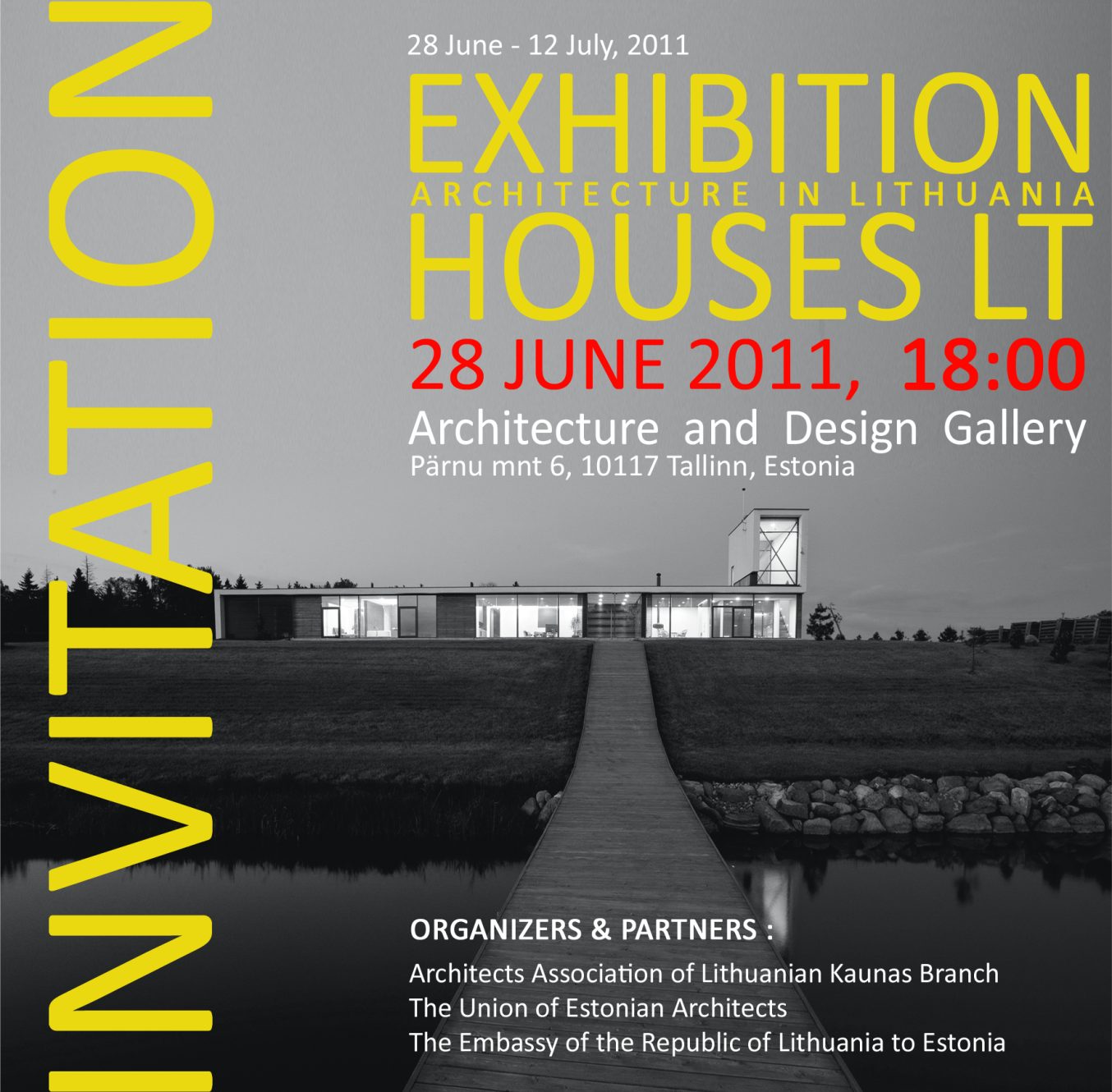
Architecture in Lithuania – Exhibition HOUSES LT
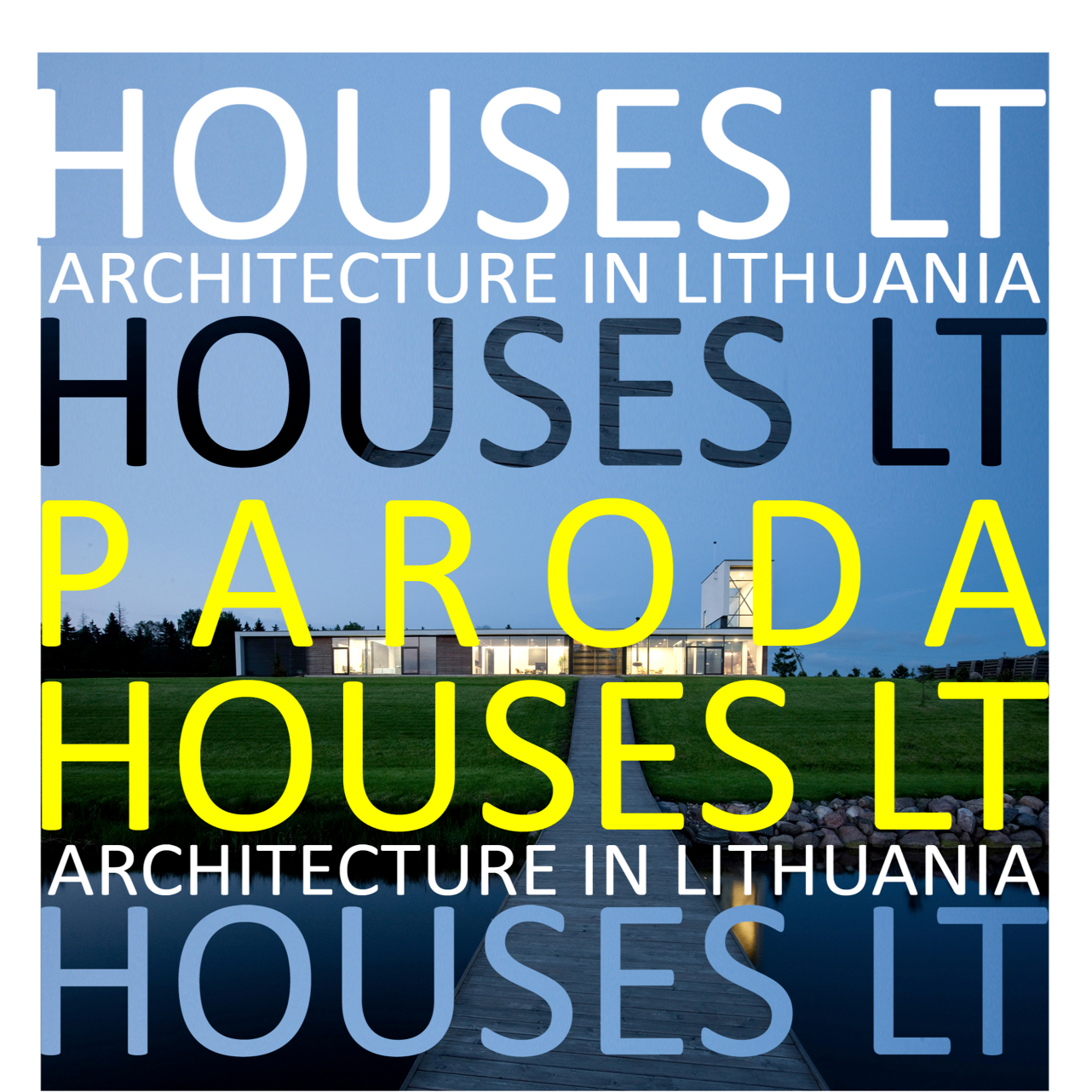
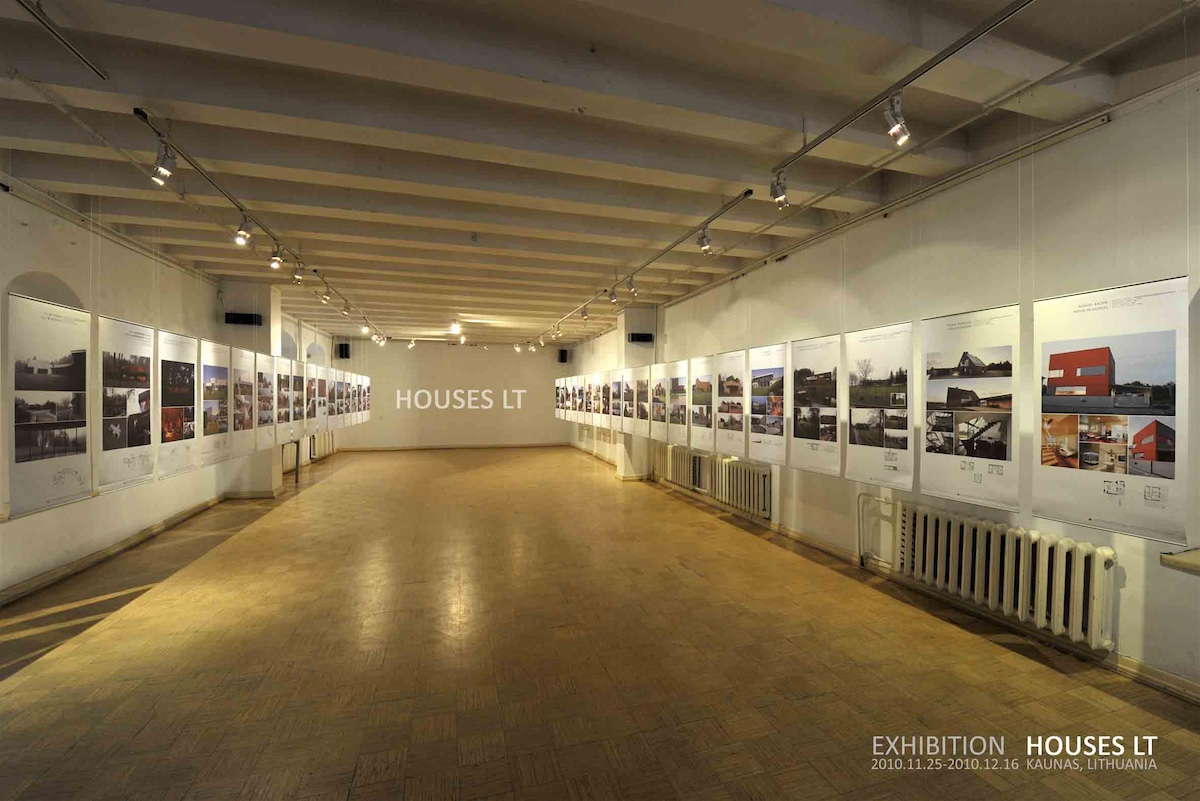
Houses LT: A retrospective survey of single-family buildings and architecture in Lithuania
Is it possible to speak about a private house as representing current architectural trends?
I asked such a question many times myself, and eventually came to a conclusion – well, why not? A private residence is perhaps the only contact that an ordinary man has with architecture. Hence by choosing how his house looks like a person defines what values and norms drive his life; what he believes in, and what ideals he cherishes.
Usually, a single-family house is considered to be a good investment or a guarantee for a comfortable life. It is only very seldom that a single-family house is treated and looked at as if it is an architectural, a so-called artistic formation, possessing also an added creative and imaginative value.
All in all, evident changes in our lifestyles and perceptions are emerging. We indeed live in times of not only of permanent change, but also of permanent uncertainty. Ongoing technological change, social and cultural liberalization, appearing urgent practical needs and requests affect how we consider and handle our closest surrounding realities and homes – whether we look at those as offering us solitude and isolation and thus contributing to escapist approaches in design, or merely we deal with the matters of physical character and exact geographic space. No matter which way we would follow, unavoidably, these different desires also affect our attitudes and feelings about architecture and arts in general.
And this is exactly the central idea around which my thinking moves – namely, around the main trends of architecture of private residences in a rapidly changing and globalizing but at the same time also humanized world.
*
The history of modern Lithuanian architecture dates back to the beginning of the 20th century. For almost two decades – from the early 1920’s to the late 1940’s – in Kaunas, the provisional capital of Lithuania at that time, a number of prominent architects have worked. They all have gained their professional education and degrees in Western schools of architecture. Vytautas Landsbergis-Žemkalnis, Stasys Kudokas, Bronius Elsbergas, and many others have brought the essentials of Western modernism into the context of the capital city of a yet still young, but rapidly consolidating, nation-state.
During that period, the local versions of Bauhaus style architecture emerged in Kaunas; and many of these functionalist architecture examples remained as representative examples till the present day. Whereas in the next five decades of the soviet period, the architecture of private houses has stagnated – even more, the building of private houses came to a standstill as it was hardly thought to be possible or imaginable (if at all allowed according to the ideological regime of that time), especially in the cities and bigger towns.
Even more discriminative was the ideology of the soviet time to reckon the notion of ‘architecture’ as synonymous to the term ‘construction’. Only in the end of the 1980’s, when soviet norms and ideological thinking weakened, and soon were destroyed, the conditions to build individual family houses have increased.
With independence achieved and economic reforms and market-oriented thinking rapidly taking place, the construction of private property has rapidly grown into a regular practice and an emerging custom and tradition. A significant number of new houses were planned and designed, although it soon became evident that much of these designs had little to do with architecture or even with the style, despite the fact that many of these were created as individual projects. Nevertheless, during the economic growth, a number of successful projects were built, for example ‘Žalias slėnis’ in Klaipėda or ‘Fredos miestelis’ in Kaunas, to mention only a very few. Actually, those mentioned here are just exceptional cases rather than regular tendencies.
All in all, only a few projects were born in historically developed places of cities, despite a significant number of houses built in the so-called ‘prestigious places’ of Vilnius, Kaunas, or Klaipėda. The majority of projects offered here are either city houses in newly developed suburban areas, or residential houses and villas in the countryside.
*
In architectural discussions, we very often talk about an increasing flow of information, developments in new technologies and modern materials – all that drives homogenization practices in architecture. These global trends also affect how we live and what values and norms we base our decisions upon. Indeed, our attitudes, norms and values are changing rather slowly, but nevertheless definitely: we are becoming more open to new experiences and ideas, while our lifestyles are getting similar to the habits and customs of other Europeans.
Architectural examples presented here is a proof that in our country, less and less attention is given to regional and local norms and values. The majority of projects in this retrospective overview represent global architectural trends; consequently, each house shown here could be built in any European country.
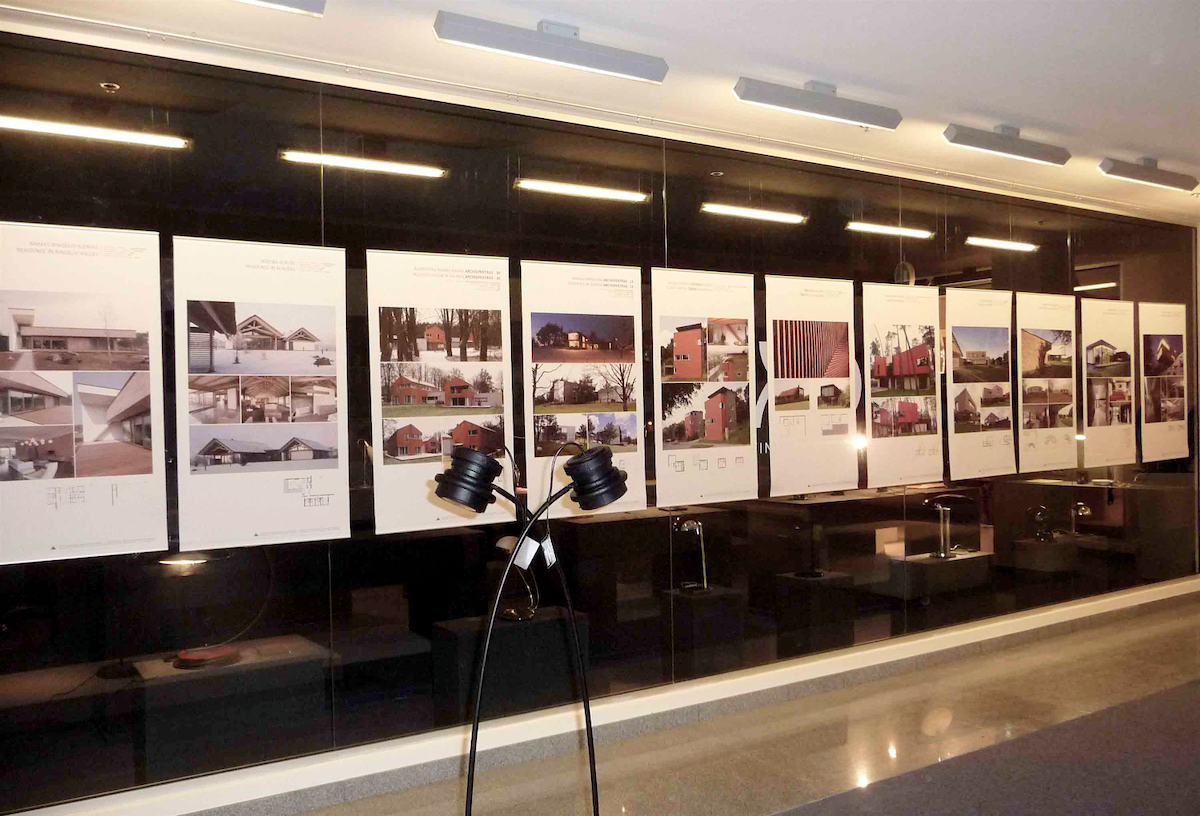
The overview presents houses designed during the last ten years by well-known Lithuanian architects. I consciously tried to avoid selecting just big and expensive homes. At the same time, I have to acknowledge that esteemed architecture – the one which has an enduring value of representing both time and space – is generally appreciated by people with higher than average income. Also, one can observe that an average house presented in photographs here is bigger than 300 m². Much to my regret, in Lithuania, we do not have many examples of good small-scale architecture, which indeed would be very much desired to have in a small modern state.
On the whole, there are examples of good architecture of private houses designed in Lithuania. It is inly because of technical limitations, many are not presented here. However, this retrospective look is not a final product: rather, it is an ongoing project which will be updated and continued.
Gintaras Balčytis, Exhibition Curator , 2010
–
–
–
–
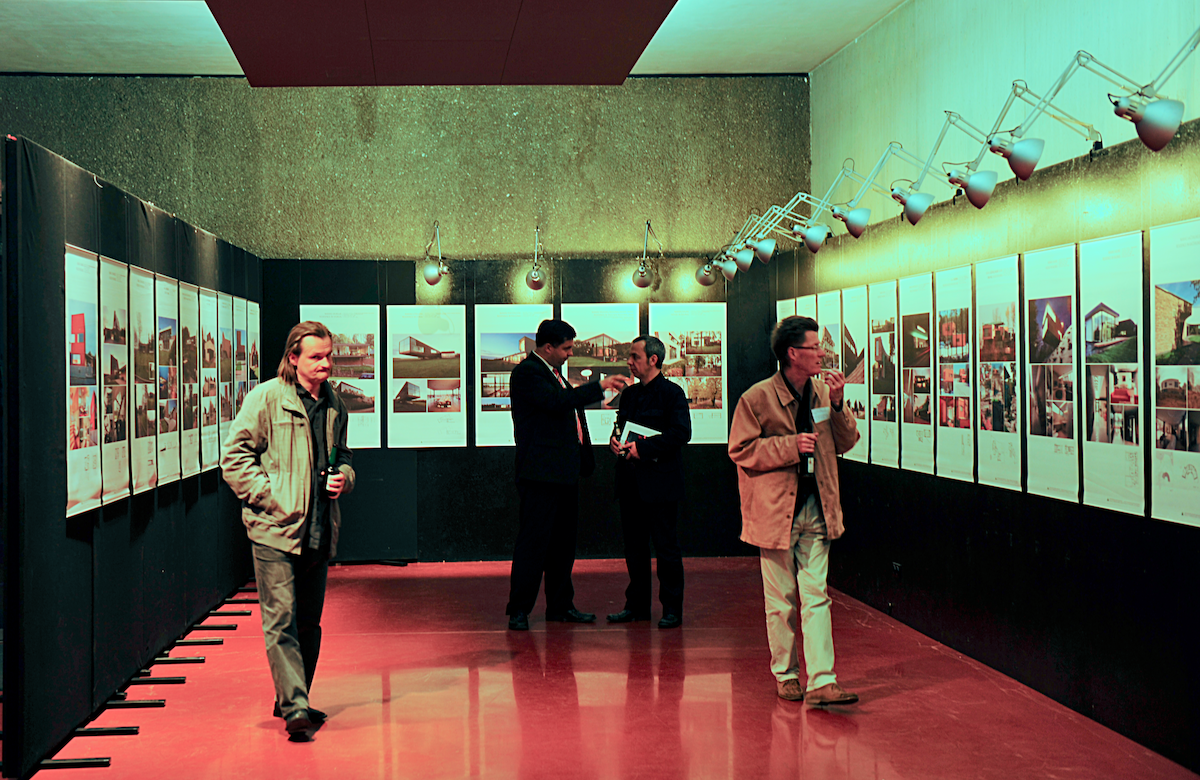
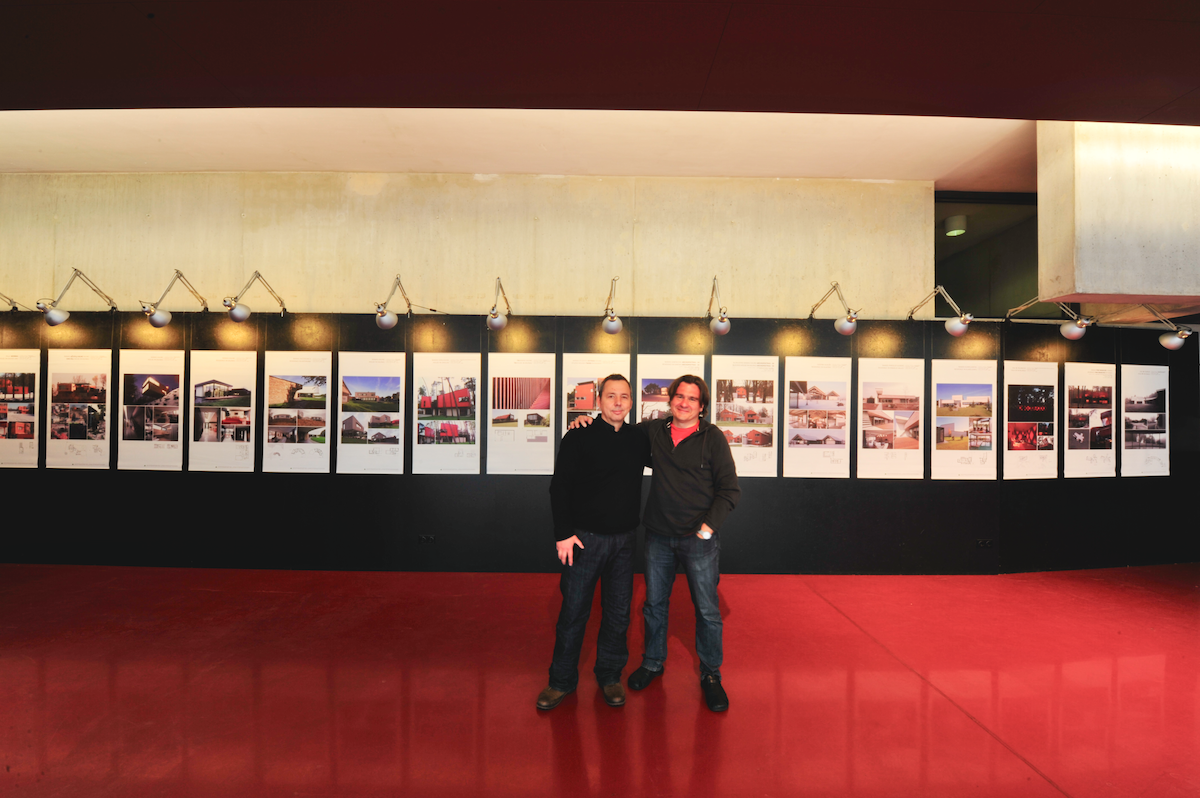
–
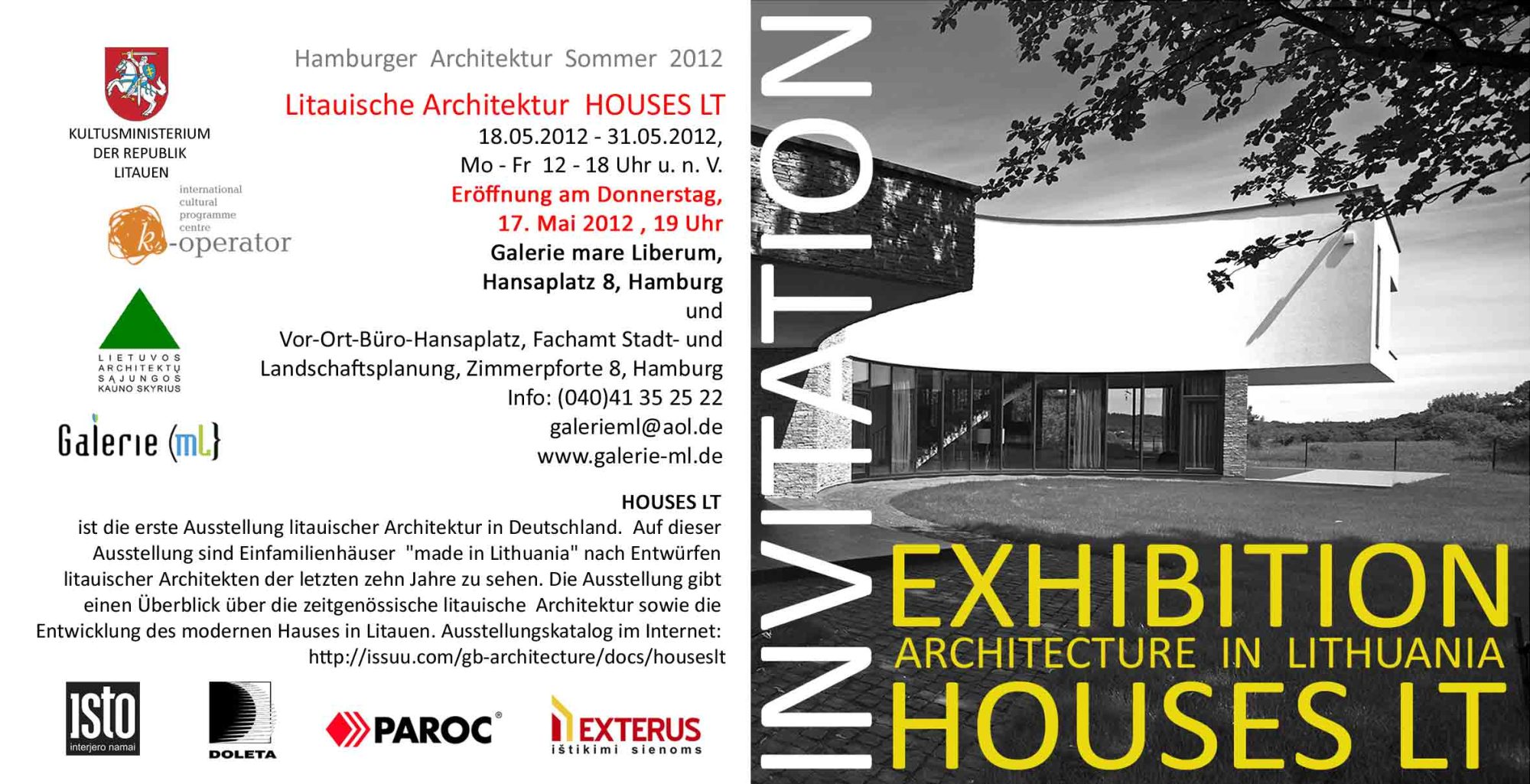
–
Exhibition catalogue HOUSES LT , 80 pages., Ukrainian ,2011;
Exhibition catalogue HOUSES LT , 80 pages., Russian ,2011